

Our philosophy
About Digital Reef
Small organisations across Aotearoa New Zealand do extraordinary work – recreation clubs maintaining backcountry tracks, conservation trusts restoring wetlands, community groups running youth programmes in places no one else reaches. They hold irreplaceable knowledge about the places they care for, yet rarely have the tools or capacity to turn that knowledge into influence when planning decisions are made.
Digital Reef exists to change that.
Digital Reef is not a technology company that discovered community need. It is a charitable trust that builds technology because the community need demands it. That distinction shapes every decision we make – from governance to code.
This page explains why we do things the way we do.

Our story
The problem is not a lack of information, but a lack of capacity to find, interpret, and act on it. Every week, central and local government publish resource consents, policy changes, environmental data, and planning documents that affect communities directly. Most of it passes unnoticed – not because people do not care, but because the information is scattered across dozens of portals, published in formats that require specialist knowledge to read, and released on timelines that leave little room for response.
This is disproportionate and unequal access to civic information. Large organisations and well-resourced interests can afford dedicated teams to monitor, analyse, and respond to these signals. Small organisations cannot. The result is a structural disadvantage that has nothing to do with merit and everything to do with infrastructure, capacity and resourcing.
Digital Reef was founded to build the shared infrastructure that closes this gap – spatial data platforms, civic monitoring tools, and field data collection systems that give small organisations the same situational awareness and ability to be a part of the decision making that large ones take for granted.
Three foundations
Our work rests on three complementary frameworks. Together they shape how we build, govern, and share infrastructure.
Stewardship
Service over self-interest. Accountability over authority.
We hold resources in trust for the communities we serve rather than accumulating control. Every tool we build is designed to increase community capability, not dependence. The question is always: does this make the organisation stronger when we step away? Stewardship means thinking in generations, not quarters. The infrastructure we are building is designed to outlast any individual contributor, including its founders. It belongs to the commons.
Commons governance
Communities can manage shared resources – given the right structures.
Ostrom's Nobel Prize-winning research showed that common-pool resources thrive when the people who depend on them have a genuine voice in how they are managed. Digital Reef is a commons. Our tools, our data pipelines, and our organisational knowledge are shared resources. We are building governance structures that give member organisations meaningful participation in what we build, how we operate, and where we direct our energy.
Kaitiakitanga
Guardianship of the natural and social world for future generations.
Kaitiakitanga is not a metaphor we borrow. It is a living practice with deep roots in te ao Māori, and it speaks directly to what Digital Reef is trying to do: tend shared resources so they remain healthy and available for those who come after us. We hold kaitiakitanga as a governance principle, not a branding exercise. It informs how we think about data, about relationships, and about our obligations to the communities and ecosystems our work touches.
Te Tiriti alignment
Te Tiriti o Waitangi and Māori Data Sovereignty
Te Tiriti o Waitangi is a non-negotiable governance principle for Digital Reef. Clause 16 of our Trust Deed formally commits the Trust to operating in a manner consistent with Te Tiriti. This is not aspirational language – it is a binding obligation on our trustees.
In practice, this means we recognise and support Māori Data Sovereignty as articulated by Te Mana Raraunga, the Māori Data Sovereignty Network. Māori data – data about Māori, collected from Māori, or relevant to Māori communities and interests – carries obligations that go beyond standard data governance. Iwi, hapū, and whānau have the right to govern how their data is collected, stored, and used.
Authority
Rangatiratanga
Māori have an inherent right to exercise control over Māori data and Māori data sovereignty.
Relationships
Whakapapa
Data has whakapapa – its origins, relationships, and uses matter. Provenance and lineage are tracked and respected.
Obligations
Whanaungatanga
Data collection creates obligations of care. Benefits should flow to the communities from whom data originates.
Collective benefit
Kotahitanga
Data should support collective Māori aspirations and wellbeing. Community benefit comes before commercial exploitation.
Reciprocity
Manaakitanga
Those who contribute data are entitled to appropriate return. Transparency about how data is used is essential.
Guardianship
Kaitiakitanga
Data requires active stewardship throughout its lifecycle. Retention and deletion follow appropriate protocols.
We do not claim to have all the answers. We are learning, listening, and building relationships. What we can say is that Te Tiriti alignment is woven into our governance from the Trust Deed outward – not bolted on as an afterthought.
The guild model
Guilds are functional, not taxonomic – borrowed from ecological guilds (organisms exploiting the same resource class, regardless of taxonomy). Digital Reef's six guilds organise constituencies by shared interest in place, not by organisation type.
Waterspace
Ocean, rivers, lakes, coastal recreation
Landspace
Tramping, hunting, cycling, land-based recreation
Airspace
Aviation, paragliding, drones
Accessibility
Universal access, inclusive recreation
Emergency Response
SAR, civil defence, natural hazards
Taiao
Biodiversity, habitat restoration, heritage
The guild model currently encompasses 1,793 organisations across six guilds, with 22 federations representing 587 regional clubs and branches. Explore all guilds →
Symbology
When you build GIS tools for communities who depend on maps to make decisions, colour is not decoration – it is information. Every colour in the Digital Reef GIS Colour Scheme must survive a single question: does this look like what it represents?
This is Nelson's "looks like the thing" principle. Water is blue. Vegetation is green. Tracks are orange. Hazards are red. Built things are grey. Cultural heritage is purple. If a colour cannot defend itself on a map, it goes to reserve.
Water
Depth and permanence through lightnessMarine ecology
Teal distinguishes ecology from plain waterVegetation & ecology
Darkness equals wildness, lightness equals managementAgriculture & pastoral
Yellows and ochres of harvested fields and tussockTracks & recreation
The colour of tramping signposts and hut roofsHazards & emergency
Red means danger – urgency through warm intensityCultural & heritage
Distinct from all natural hues – significance through perceptual separationAirspace
Deep navy for authority, steel for corridorsInfrastructure & transport
Built from earth – browns, yellows, and utilitarian tonesEmbracing community colour schemes
Many of our Wellbeing Groups and partner organisations have established colour identities of their own. Where a Wellbeing Group has developed a colour scheme for their domain – whether it is the orange of DOC track markers, the blue of maritime charts, or the green of conservation organisations – we adopt those colours with permission rather than imposing our own. The GIS Colour Scheme is designed to be compatible with, not a replacement for, the visual languages that communities already use.
56 colours across 11 families. Full reference in the DR Branding Kit.
Place-based wellbeing
Digital Reef's work is grounded in place-based wellbeing research and assessment methodology. We draw on established frameworks to structure data collection, assess evidence quality, and ensure our outputs are decision-relevant in planning contexts.
One such framework is affordance mapping – a method for identifying what a place offers the people who use it (its affordances), so those values can be recorded, compared, and represented in evidence. It supports our core function: making place-based values visible and defensible.
This is not abstract. When a regional spatial plan is being developed, or a resource consent is being considered, the question is whether the values of a place are represented in the evidence base. Our tools help communities produce that evidence – structured, rigorous, and ready for formal processes.
What makes us different
Infrastructural, not advocacy
We do not campaign or take political positions. We build and maintain shared tools that help organisations do their own work more effectively. Think of us as the pipes, not the water.
Aotearoa New Zealand-specific
Our tools are built for the New Zealand civic landscape – its legislation, its government structures, its place names, its communities. We are not adapting a global platform. We are building from the ground up for this place.
Transparent and auditable
Everything we build is open. Our methods are documented. Our data sources are cited. If you want to understand how we arrived at a particular result, you can trace the path yourself.
Lower barriers, not higher walls
Civic information should be easy to access, easy to understand, and free at the point of use. We will never charge for access to public information. Our role is to lower the barriers between communities and the information they need.
The team
Digital Reef was founded by Dr Shayne Galloway, who serves as Chair and Technical Lead of the Trust. Shayne brings a passion for geospatial science and community empowerment to the role.
The Trust is governed by three founding trustees. The wider team is growing as we move toward public launch.

Dr Shayne Galloway
Chair / Technical Lead
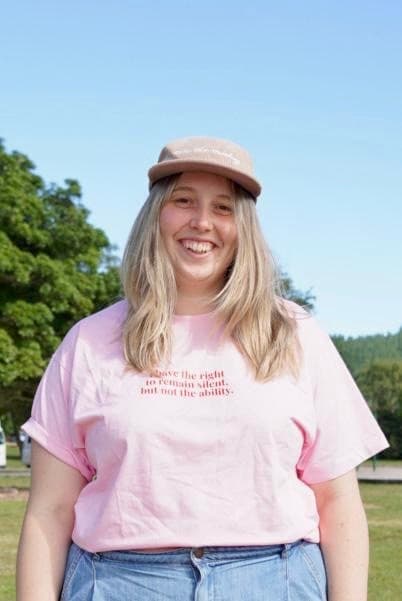
Nicola Buisman
Trustee
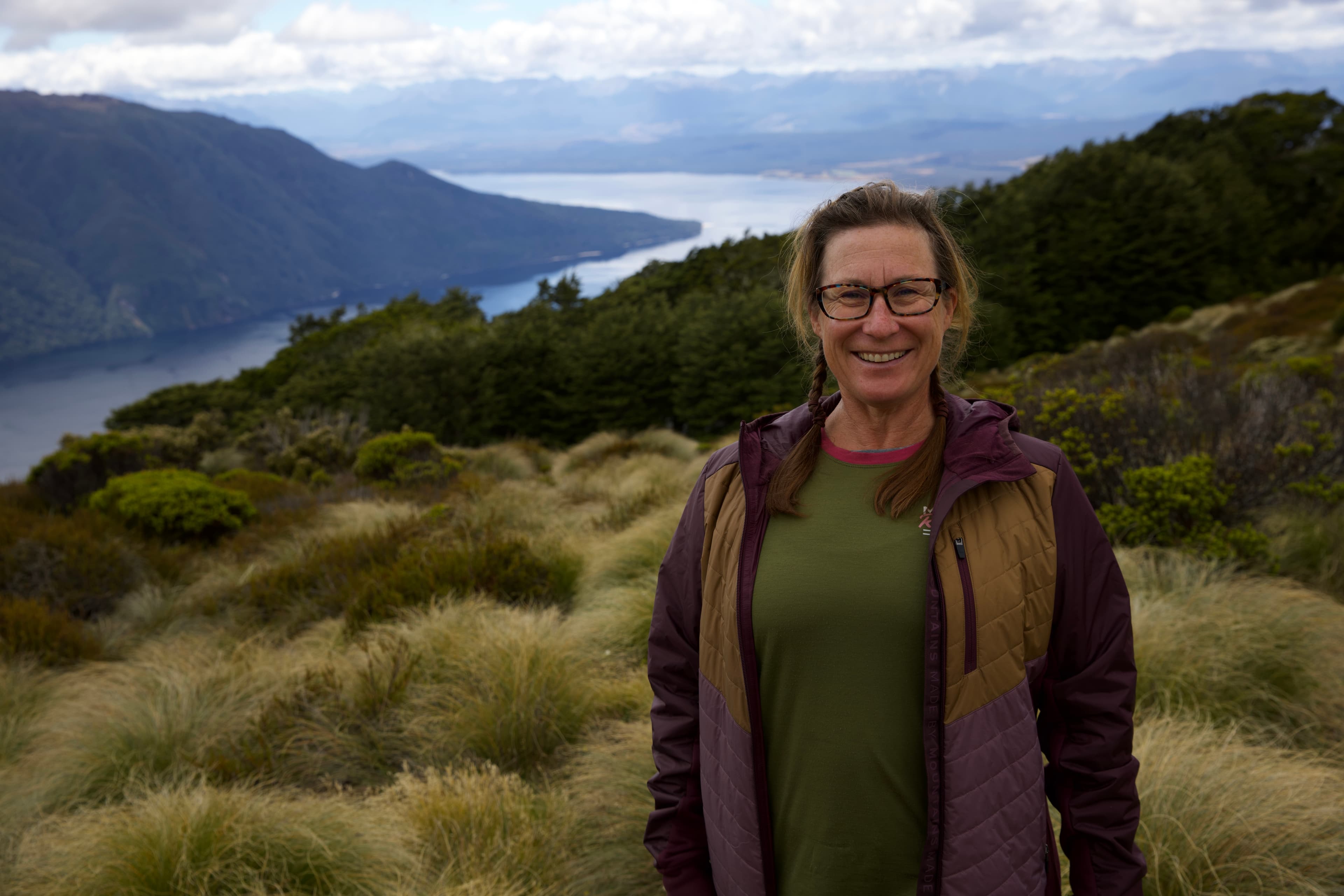
Maree Baker-Galloway
Trustee
or get in touch at info@digitalreef.nz
The Charitable Trust
The Digital Reef Charitable Trust was established by Trust Deed on 4 December 2025 and incorporated on 13 February 2026. It is registered with the New Zealand Companies Office (number 50254327, NZBN 9429053446046) and operates exclusively for charitable purposes.
Charitable purposes
The Trust Deed defines three charitable purposes:
- Advancement of education – platform development, training, and research support for place-based wellbeing
- Relief of poverty – providing low-cost access to GIS and data tools that would otherwise be unaffordable for small organisations
- Community benefit – fostering social inclusion, collaboration, and informed decision-making through shared digital infrastructure
Ehara taku toa i te toa takitahi, engari he toa takitini.
My strength is not as an individual, but as a collective.